

The Creative Trends That Will Shape Fashion Retail in 2026 (and no one is talking about)
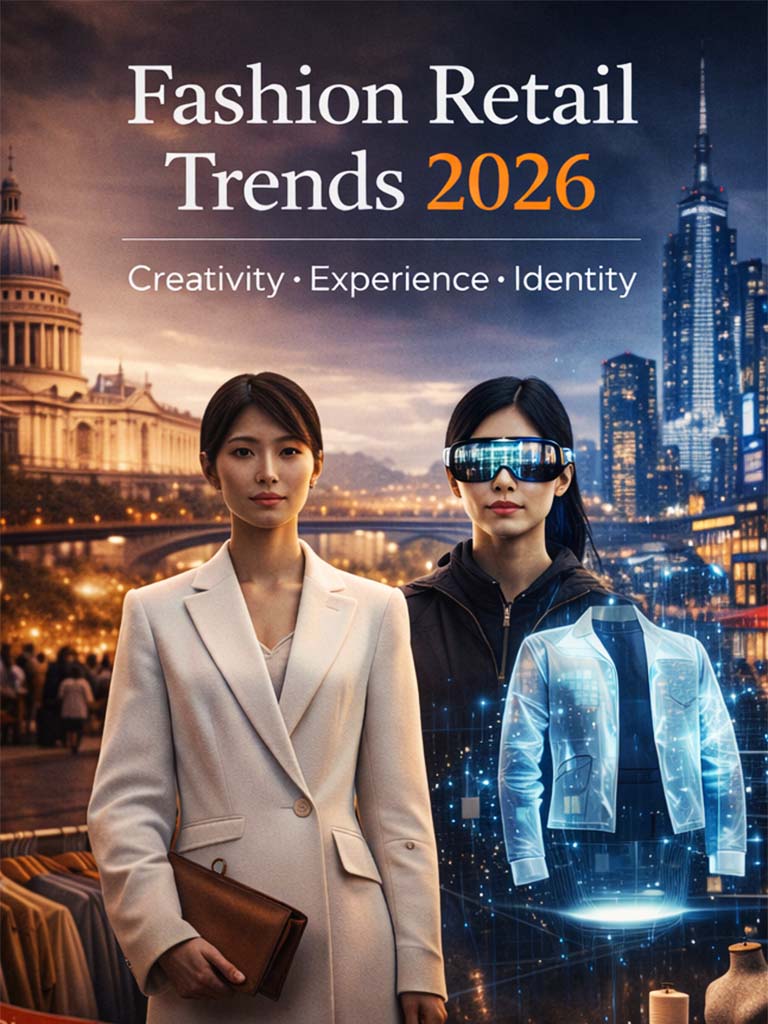
If one thing is clear for 2026, it’s that fashion retail is no longer just about the clothes you sell, but how, why and where people experience them. These are not passing trends, but deep cultural shifts that are redefining how consumers relate to brands, spaces and creativity on a global scale.
Europe: craftsmanship, storytelling and phygital experiences
Across Europe, retail is evolving into a truly hybrid experience, where physical and digital environments blend seamlessly. Stores are no longer simple points of sale, but social and cultural hubs: hosting pop-up formats, local events and immersive experiences that strengthen community ties.
In fashion, both runways and street style point towards more expressive aesthetics—bold prints, emotional fabrics and architectural volumes—responding to a growing desire for authenticity and identity. At the same time, quiet luxurycontinues to gain ground: fewer logos, higher quality, and stronger narratives behind each product.
Asia: speed, technology and new creative codes
In Asia, creativity moves at a different pace. Innovation, extreme digitalisation and rapid trend cycles define the landscape. Micro-trends born on social platforms spread globally in a matter of weeks. Here, generative AI and advanced personalisation are already deeply embedded in both design and retail strategies.
Spain: creative potential with structural limits
Spain holds strong cultural assets—craftsmanship, Mediterranean aesthetics and lifestyle—but faces the challenge of turning creativity into sustainable retail beyond Madrid and Barcelona. The opportunity lies in activating local talent, connecting fashion with culture and decentralising retail experiences.
At the same time, Europe is seeing the rapid growth of ultra-low-price brands that successfully build clear lifestyle universes. In Mediterranean countries, where income levels are lower, these brands ease economic pressure by offering accessibility and identification—while opening an essential debate about value, sustainability and creative future.
Which could be the major threat for 2026?
Hyper-personalisation and AI promise efficiency, but they also bring real risks: creative saturation, constant imitation and loss of brand identity. Paradoxically, while brands talk about differentiation, many retail spaces are starting to look increasingly alike.
In 2026, the brands that succeed will not simply sell products: they will tell stories, build communities and defend a clear, recognisable identity.
Sources: Spring Fair – Fashion & Retail Trends. The Storefront – Global Retail Trends. Business of Fashion (BoF). Vogue Business. McKinsey – State of Fashion. WGSN – Consumer & Retail Forecasting. TikTok Creative Center (Asia trends). Idea original – reflection & editorial: José Luis Ledesma
